
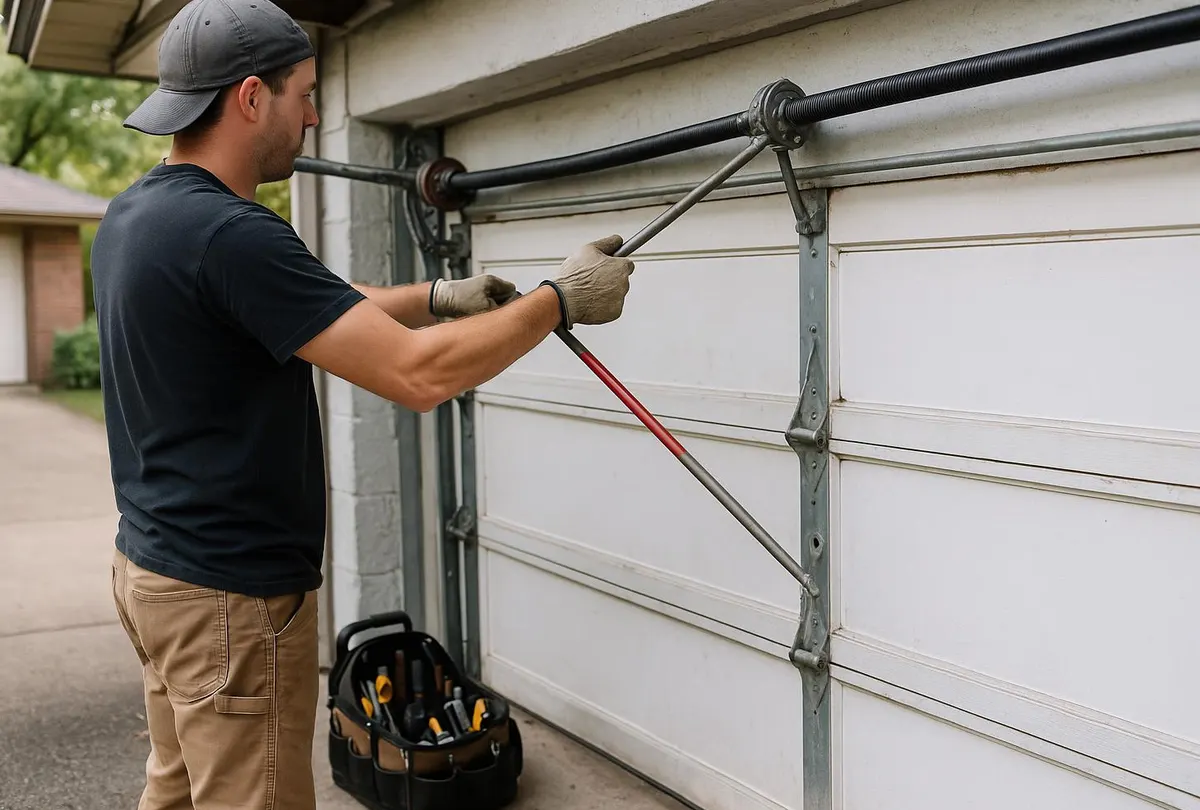
What a technician actually sees on these calls
A typical call starts the same way: a homeowner has one quote in hand, maybe two, and the numbers don't match or the wording is confusing. Sometimes it's a spring that snapped overnight and the family got an emergency quote while half-dressed in the driveway. Other times it's an older door in a Porter Ranch or Granada Hills neighborhood where the opener is failing and the first company quoted a full replacement instead of a simple repair. The quote itself is usually the problem — not the door. Vague line items, pressure to decide on the spot, and no explanation of why a part needs replacing instead of repair. Once you know what a clean quote looks like, these calls get a lot shorter.
What a legitimate quote should include
- Itemized parts — spring size and type, opener model, cable gauge, roller type — not just "hardware" as one lump line.
- Labor listed separately from parts, so you can see what you're paying for diagnosis and install time versus materials.
- Torsion vs. extension spring noted explicitly, since torsion springs cost more but last longer under daily heat cycling, which matters in inland Chatsworth summers.
- Cycle rating on springs (commonly 10,000 vs. 25,000+ cycles) — a longer-rated spring costs more upfront but means fewer service calls.
- Warranty terms in writing: how many years on parts, how many on labor, and whether it's prorated.
- A stated reason for any recommended replacement, not just a repair.
What to ignore
- Scare-tactic language like "this could fail any day" without a specific symptom backing it up.
- "Today only" discounts meant to rush a signature before you can get a second opinion.
- Bundled pricing that hides whether you're paying for one spring or two, one roller or a full set.
- Upsells to a brand-new opener when the actual issue is a worn sensor, misaligned track, or a dead remote battery — all common after dusty, dry stretches when debris builds up on photo-eye sensors.
Questions to ask before you say yes
- "Is this a repair or a full replacement, and why?"
- "What's the cycle rating on the spring you're quoting, and is it matched to my door's weight?"
- "Are you replacing one spring or both? If just one, why not the matching pair?"
- "What's covered under warranty, and for how long on parts versus labor?"
- "Will this opener handle a heavier insulated door if I upgrade later?"
- "Is there a trip or diagnostic fee if I don't move forward today?"
Where local conditions should factor into the decision
Hot, dry summers and dusty wildfire-season air put real wear on springs, rollers, and opener gears here — metal fatigues faster with repeated heat expansion, and dust works into track hardware. Winter rain season is when weatherstripping and bottom seals matter most; a quote that skips seals on an older door facing exposed weather is missing something that will cost you later in drafts and water intrusion. If your home has had any structural retrofit work, it's worth asking whether the garage door track and wall brackets were checked as part of that, since retrofit changes can shift anchor points the door hardware depends on.
When to call Chatsworth Garage Door
If you've got a quote that doesn't add up, or a door that's making noise, sticking, or reversing unexpectedly, it's worth a second set of eyes before approving anything expensive. Chatsworth Garage Door provides straightforward garage door repair and spring replacement with itemized pricing up front, so you know exactly what you're paying for and why. We'll also tell you plainly when a repair is enough and when replacement actually makes sense, instead of defaulting to the bigger job. If the issue happens outside business hours — a spring that goes at night, a door stuck half-open — our emergency service gets a technician out quickly rather than leaving you waiting until morning.
If you're holding a confusing quote or dealing with a door that's acting up, call Chatsworth Garage Door for a clear, written estimate and an honest answer about what your door actually needs.